Mimi Zeiger

Critic, editor, curator and instigator.

Denise Scott Brown would probably hate it if I read Encounters as biography. As the book’s editor Izzy Kornblatt goes to lengths to explain, this collection of the architect’s photography is meant to offer a series of visual lessons in how to see the world from a perspective inflected by the generous teachings of the likes of sociologist Herbert Gans. Yet given such tantalizing archival materials, nearly 400 photographs taken between the 1950s and 1970s, the urge to parse the details of her life through them holds sway.

Our time loves to conflate image and identity. In recent decades, Scott Brown has been embraced in somewhat contradictory ways as a refractory voice for calling out longstanding bias in the field, as she does in lectures and writings such as “Room at the Top? Sexism and the Star System in Architecture” (1989). She’s also become a mumsy avatar of postmodernism. Encounters enforces neither role.
Read More …

A loving and intense photographic approach

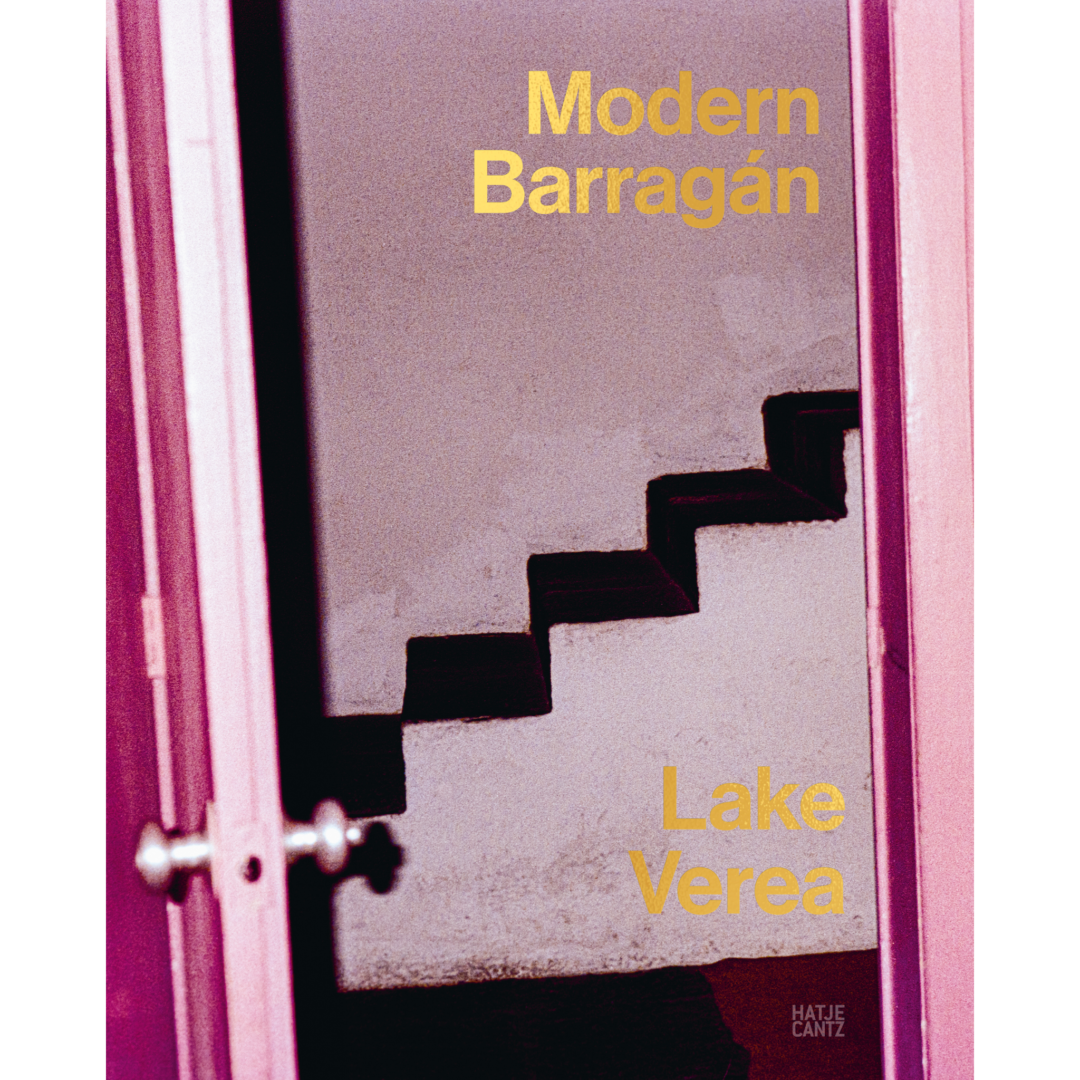
Modern Barragán is a personal book that unfolds and recounts multiple encounters the contemporary Mexican artists Lake Verea have had with Luis Barragán’s oeuvre since 2006. This book unveils photographic depictions of the architect’s work and private spaces as a tribute and a celebration, an anthem of love and admiration. While spending time in his private home, as enthusiastic aficionados enchanted by the elements of his house, the game unfolds. Read More …

In 1971, the American Institute of Architects awarded the prestigious AIA Industrial Arts Medal to self-proclaimed “potter” Edith Heath. It was the first time the organization had bestowed such recognition on a ceramicist. 

Heath, the remarkable founder of the Sausalito-based Heath Ceramics, is probably better known for midcentury homewares. Her earthen tableware captures a casual West Coast modernism in hues drawn from California’s landscape. Her company was founded in 1947, and most design aficionados have a Heath bud vase or generous serving bowl in their collection. Yet the AIA recognition shed light on what was then an emerging and exciting facet of her practice—architectural tile. “Heath Ceramics have become integral parts of architecture in installations across the United States,” noted the jury. 

Read More …

The sky is bright white. It’s 12:30 p.m. on a Sunday, and two dozen people are lined up in front of Courage Bagels on Virgil Avenue. Everyone is desperate for shade. Some foodies hold paper parasols to block the sun. Lucky diners, lox and schmear in hand, sit under frilly outdoor umbrellas. Half a block away, an unhoused person sprawls under a jacaranda.

I’m driving—AC blasting, terrier panting in the back seat—on the hunt for some recently deployed bus shelters designed by SOM with BMW’s Designworks and Studio One Eleven. The irony is not lost on me.

Read More …

Hestia, virginal and nary a myth to her name, is the Greek goddess of the hearth. Perched high on Mount Olympus, she would tend the gods’ fire. Zeus put her in charge of sacrifices, and combustible bits of animal flesh and fat would catch and spark as she fed offerings into the flames. While other mythical figures would venture out on odysseys and trickster expeditions, she was central to the continuity of family life—even the Real Housewives–esque craziness of hers.

It is from Hestia that we receive our domesticated idea of tending to the fireplace at home, and of gathering around the hearth (the translation of her Ancient Greek name)—a designed object that rises above its functional purpose, enhancing its users’ everyday lives as a site of communion and reflection. But times have changed. As the climate crisis upends seasonal expectations and increases the frequency of devastating fires, what’s the point of having a hearth in our homes now?

Read More …

Modernism marks the beginning of linear time and the end of circular time, commented novelist Alvaro Enrigue. His remarks came amid an exchange with artist Adrián Villar Rojas— one of seventeen performances, keynotes, and dialogues presented as part of AIR Aspen: Life as No One Knows It, a weeklong interdisciplinary conference organized by the Aspen Art Museum. The inaugural festival, held in late July to time with the Aspen Art Fair and ArtCrush Gala, is the latest ideas summit to mine the Bauhaus-inflected legacy of the Aspen Institute’s legendary International Design Conference and gather minds in the Rockies.

Read More …

I’m tempted to quote Dionne Warwick’s famous line “LA is a great big freeway” as a breezy lede to the Los Angeles County Art Museum’s preopening of the David Geffen Galleries, if only to insert the singer and psychic’s name into the pages of LARA, but Los Angeles is not a great big freeway. However, Peter Zumthor’s infrastructural art museum is (as I’ve written before) an overpass.

The overpass is certainly another well-worn trope—some soaring CalTrans feats and others wrapped in chain link and hung with NO ICE banners. Yet it’s also a moment of spatial trespass, where one part of the urban fabric folds back on another.

Read More …

For some, an executive order issued by California governor Gavin Newsom does little to address the complexities of living within an urban-wildland interface.

‘We are living in a new reality of extremes,’ said California governor Gavin Newsom in a press release that accompanied a February executive order issued after the Eaton and Pacific Palisades fires that destroyed homes, businesses, and neighbourhoods across Los Angeles.

The order, designed to harden communities against urban wildfires, introduced a statewide adoption of a ‘Zone 0’ approach around structures in fire-prone areas. It also updated the state’s Fire Hazard Severity Zone maps, which increased the amount of land considered at high or very high fire risk by 1.4 million acres. While homes at the periphery of open wilderness – perched on hillsides, nestled in canyons – were always in peril, the January fires and these new designations underscore that suburban-seeming neighbourhoods must also adapt.
Read More …

Drawing on an inherited plot of land, his father’s steel company, and his brother-in-law’s architectural know-how, Motoshi Yatabe’s new house is all in the family.

Motoshi Yatabe grew up on a quiet, almost rural street in Japan’s Saitama Prefecture. There was a vegetable garden in front of his childhood home and a rice field across the street—plenty of room for him and his sister, Masako, to play. Sited roughly 15 miles outside of central Tokyo, it had yet to be colonized as part of the Greater Tokyo Area. Today, each block is lined by single-family homes packed shoulder to shoulder like commuters on a Tokyo subway.

Read More …

Four months have passed since the Eaton and Palisades fires devastated Los Angeles neighbourhoods. In recent weeks, signs of repair and restoration are underway: FEMA workers clear sites, loading trucks full of concrete and steel debris, while charred oak trees show green signs of life. Many design-oriented groups are trying to chart the next steps for residential architecture. For example, FORT Los Angeles launched ‘Healing the Heart of LA’, and the new Case Study Adapt programme aims to pair ten select architecture firms with displaced families.

Read More …